


EHP Congress 2026 in Kraków: the heat transition is moving from ambition to implementation
From 9 to 11 June 2026, Kraków became one of the key meeting points for the European district heating and cooling sector. Euroheat & Power Congress 2026 brought together district heating operators, technology providers, municipalities, public institutions, designers and experts responsible for the practical implementation of the energy transition across Europe.
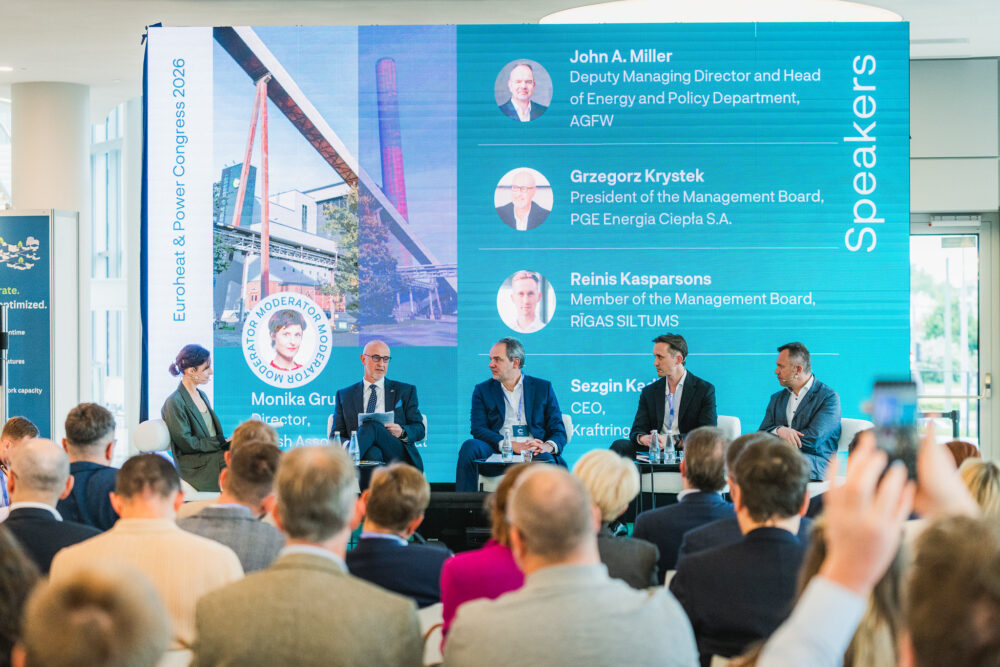
The theme of this year’s congress — “The Heat Transition in Action” — clearly reflected the shift currently taking place in the sector. The discussion is no longer only about whether district heating and cooling systems should be developed. The more important question is how these networks should be designed, modernised and operated so that they remain ready for the next decades of technical, regulatory and economic challenges.
District heating as strategic infrastructure
One of the main conclusions from the congress is that district heating is increasingly being treated as strategic infrastructure. It is no longer seen only as a local system for delivering heat to buildings. It is becoming an important element of urban energy security, a tool for reducing emissions and a platform for integrating different energy sources.
Three development directions were particularly visible during the discussions: decarbonisation of heat sources, modernisation of existing networks and the development of new systems capable of operating at lower supply temperatures. For the sector, this means that networks must be considered over a much longer horizon than the investment phase alone. Design, material and installation decisions made today will influence operating costs, heat losses and system flexibility for many years.
Lower temperatures require higher design precision
Low-temperature district heating networks were among the key topics of EHP Congress 2026. Their development is closely linked to the integration of renewable and waste heat sources, heat pumps, thermal energy storage and local industrial heat sources.
Lower operating temperatures, however, do not mean lower requirements for infrastructure. On the contrary, the more complex the system becomes, the more important stable parameters, insulation quality, reduced heat losses, joint durability and long-term operational reliability become.
This is particularly important in modernisation projects. In many European cities, the transformation will not be based on building networks from scratch, but on gradually adapting existing infrastructure to new heat sources, new balancing models and new customer expectations. In this context, a pre-insulated pipe is not just a delivery component. It is an element that directly affects the efficiency of the entire system.
Waste heat needs reliable infrastructure
Another strong theme of the congress was the role of waste heat. Across European cities and regions, there is growing interest in using heat from industry, data centres, wastewater treatment plants, municipal infrastructure and technological processes. This direction is both technically reasonable and economically justified, but it requires well-designed networks.
The heat source alone is not enough. In order for waste heat to be used effectively, infrastructure is needed to enable stable transmission, reduce losses and ensure safe operation over a long service life. In this context, the quality of pre-insulated pipe systems, the selection of appropriate material solutions and control of insulation parameters become directly linked to project profitability.
For operators, this means that investments should be assessed not only through the lens of CAPEX, but also through long-term operating costs. The cheapest solution at the purchasing stage is not always the most efficient one over the life cycle of the infrastructure.
From energy transition to cost transition
Another clear trend in Kraków was that the sector is increasingly discussing transformation through measurable figures. Decarbonisation must be financeable, measurable and possible to implement under real technical conditions. This gives greater importance to TCO analyses, heat losses, component durability, service costs, installation risks and long-term parameter stability.
This is the right direction. District heating cannot rely only on major regulatory targets. It needs specific technical decisions that can also be justified economically. This applies both to new investments and to the modernisation of existing systems.
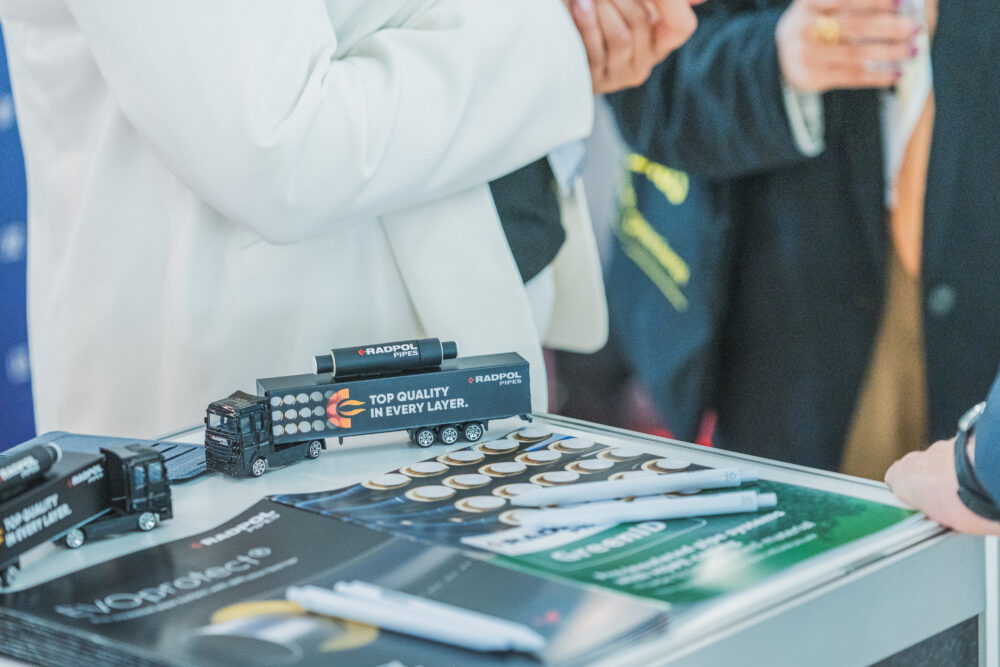
That is why, in discussions with partners and congress participants, Radpol Pipes emphasised the importance of high-quality network infrastructure. The future of district heating depends on new heat sources, but also on whether that energy can be delivered to end users safely, efficiently and with predictable operating costs.

The Radpol Pipes perspective
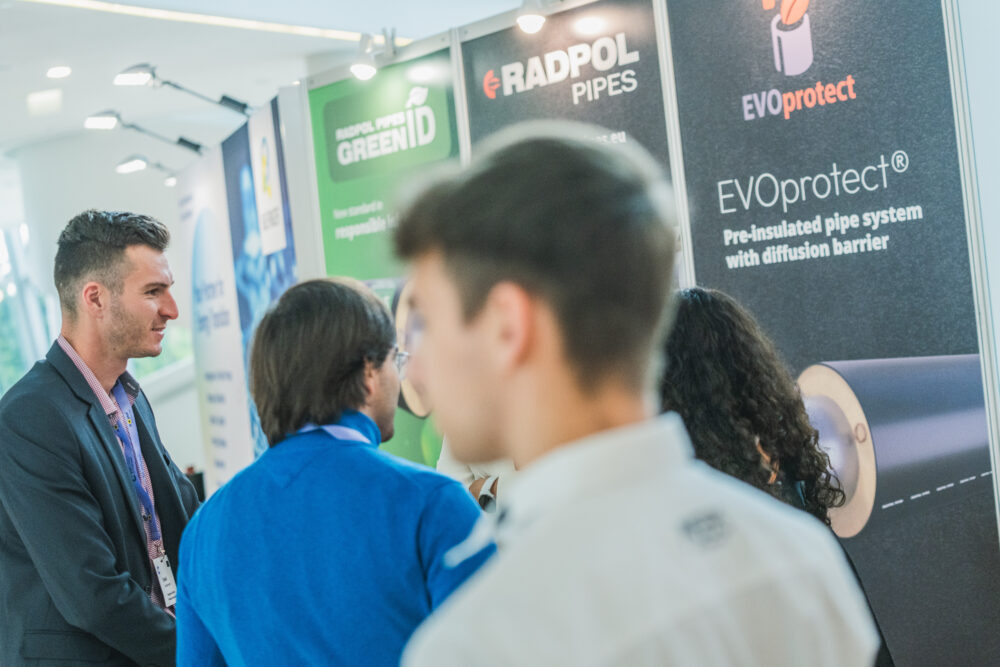
For Radpol Pipes, participation in EHP Congress 2026 was an opportunity for direct discussions with representatives of the European market about projects, technical requirements and the future direction of network modernisation. Topics related to reducing heat losses, the durability of pre-insulated pipe systems, the quality of PUR insulation and solutions supporting long-term infrastructure efficiency were particularly important.
Our approach remains consistent: a district heating system is only as efficient as its weakest link. That is why, when designing and selecting technology, it is becoming increasingly important to look not only at initial parameters, but also at their stability over time. In practice, this means focusing on solutions that help reduce heat losses, increase network durability and lower the total cost of infrastructure ownership.

What comes next after EHP Congress 2026?
The congress in Kraków showed that European district heating is moving from planning to implementation. The direction is clear: more renewable and waste heat sources, more low-temperature networks, more modernisation and greater responsibility for the efficiency of entire systems.
For technology manufacturers, this means delivering solutions that respond not only to project specifications, but also to the strategic challenges faced by operators: reducing losses, ensuring infrastructure durability, maintaining stable operation and delivering measurable benefits over the network life cycle.

EHP Congress 2026 confirmed that the future of district heating will depend on cooperation between many stakeholders: operators, municipalities, designers, contractors, manufacturers and institutions financing infrastructure investments. At the same time, it also showed that the quality of network infrastructure will be one of the key conditions for a successful heat transition.
For Radpol Pipes, this confirms the direction in which we are developing our solutions: towards durable, efficient and responsibly designed pre-insulated systems for modern heating, cooling and industrial networks.
Share


